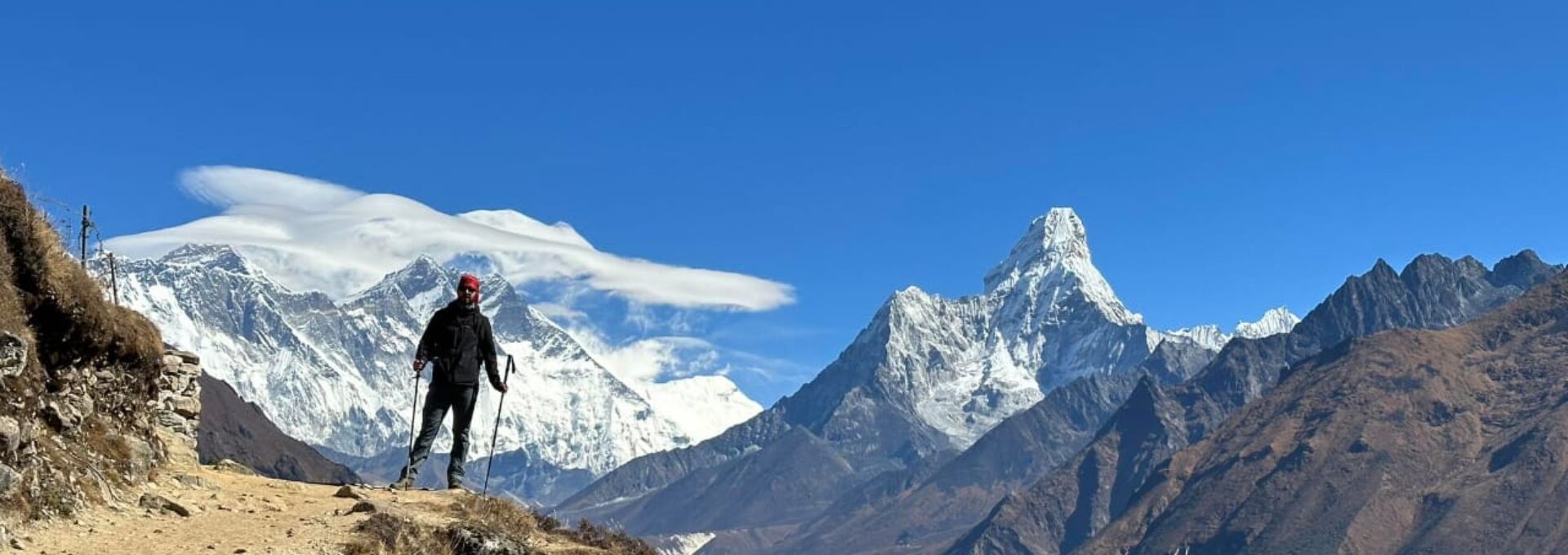
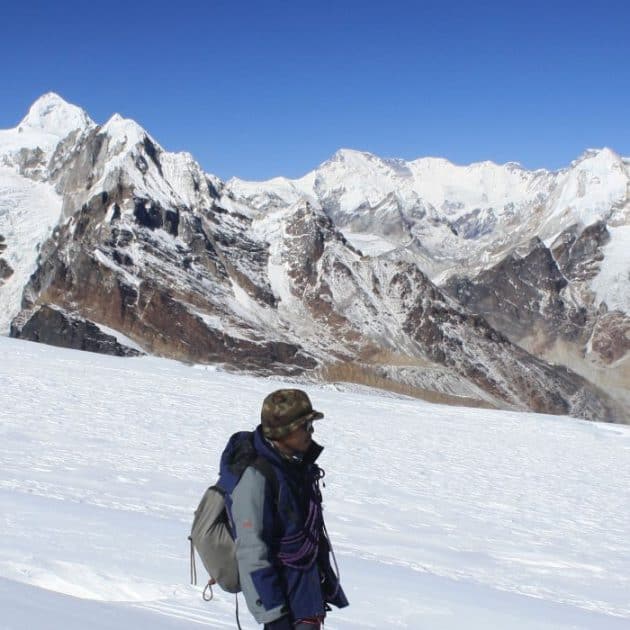
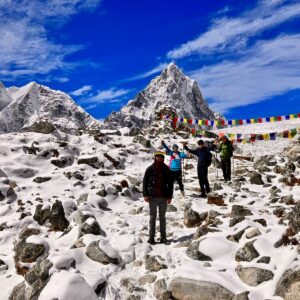
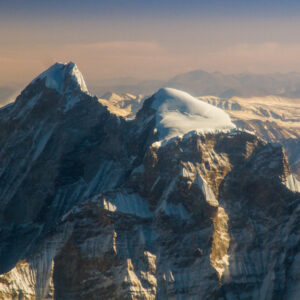
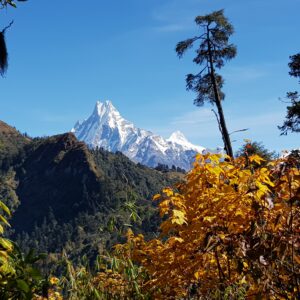
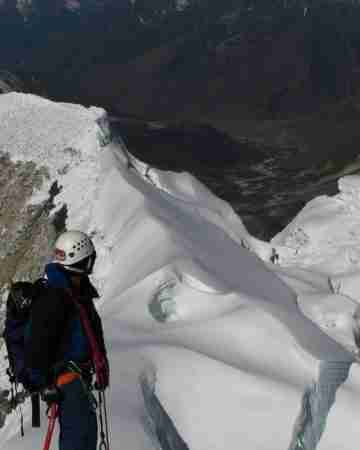
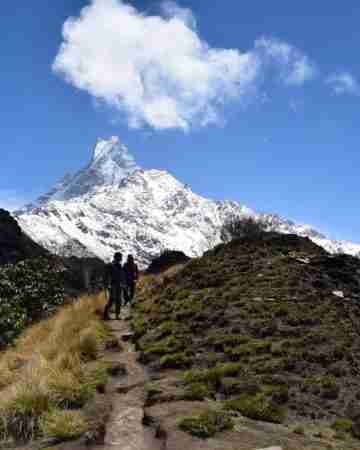
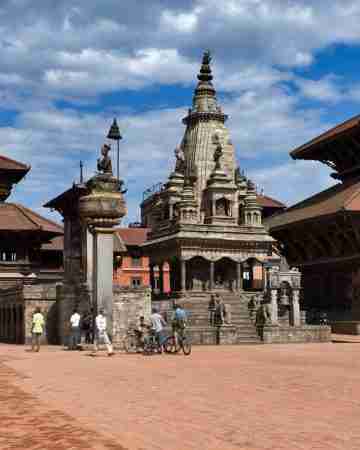
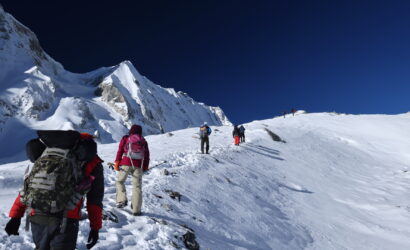
The first of its kind in Nepal, the ‘Indigenous People’s Trail’ offers unique exposure to one of the most culturally diverse areas of Nepal along with breathtaking scenery, all whilst keeping under 3000 meters. Heading in the direction of Thulo Sailung peak in the North, the golden waters of the Sun Koshi River in the south and the Tama Koshi in the East, the ‘Indigenous People’s Trail’ presents an incomparable natural blend of cultural, ethnic diversity and breathtaking Himalayan panoramas, stretching from Dhauligiri and Annapurna in the West to Numburchuili and Kanchenjunga in the East.
Against a magnificent Himalayan backdrop, visitors experience rare insight into the culture and lifestyle of several local indigenous communities including Tamang, Newars, Sherpa, Thamis, and Majhis. The two predominant religions, Hinduism and Buddhism, are ever present with a beautiful array of many temples, stupas and monasteries throughout the trip. Accommodation on the trek is in local people’s homes, away from the commercialized tourist trails, where you will be treated like part of the family. Visitors to these villages will be treated to a colorful variety of activities, from traditional dances, helping with the cooking and learning how to make the local cuisine to mingling with the family and even attending a local wedding. Home-stays allow trekkers to discover the real Nepal and to enjoy the untouched countryside as we walk through uninhabited areas and come across very few fellow travelers.
Come and take a venture in to the undiscovered in Nepal, trek tranquil trails, meditate in pristine alpine environments taught by the local people, enjoy the monasteries, the village barbeques and the overall welcoming atmosphere of these traditional mountain sanctuaries.
Day 1: Arrival in Kathmandu.
A Mosaic representative will meet you at the airport and transfer you to your hotel in nearby Thamel. Overnight in Kathmandu hotel.
Day 2: Trip arrangements, meeting with staff and sightseeing around the Kathmandu Valley.
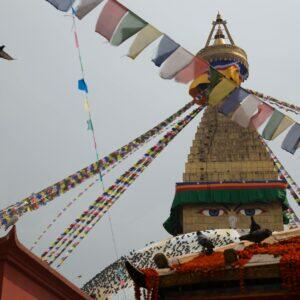
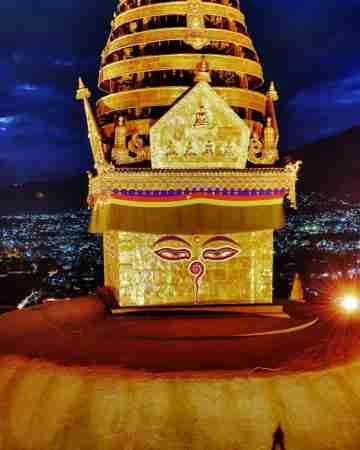
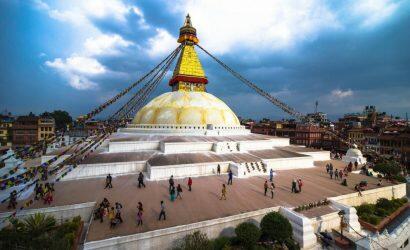
You will meet your trekking guide, discuss the trekking program and coordinate any last-minute arrangements. After/before staff meeting, a Mosaic Adventure professional tour guide will take you to visit Pashupatinath, Boudhanath Stupa, Swaymbhunath and Patan Durbar Square. Overnight in Kathmandu hotel.
Day 3: Drive to Mudhe (4 hours) and trek to Khola Kharka. (2948m/4 hours.)
We take a local bus from Kathmandu to Mudhe and then to Dhunge Village. From Dhunge, a short 90-minute climb will take us to Sailung hilltop. We then follow a short trail down to the Sherpa village of Khola Kharka where we will spend the night in the newly established Khola Kharka Community Lodge run by local Sherpa and Tamang people.
Day 4: Trek from Khola Kharka to Surkey via Rajveer. (1842m/5 hours.)
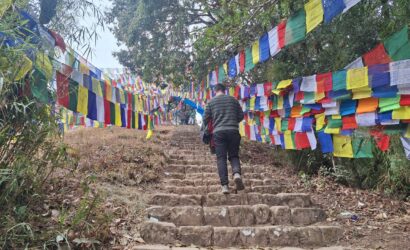
During the descent to Surkey Village through the Sailung forest, you will see a wide variety of native trees, shrubs and bird species. Tourists are welcome at the Rajveer monastery to receive a blessing from the Lamas. Along the route you pass through the Sherpa village of Dadhuwa-Dara and a traditional Tamang village, each with their own Buddhist Gompas. Prayer flags, chortens and mani stones are scattered along the route. The trail continues to descend where the spectacular 40 foot 'Thinghare' waterfall crashes onto the rocks below. A short climb brings you to the beautifully terraced settlement of Surkey where you will spend the night in one of five newly renovated Newari Home-stay houses. Spend a day in the village, enjoy Newari culture, and visit the small and unique Thami Community. The local Thami band is on hand to entertain (for a small charge) and visitors can sample the local Raksi! Thangmi, known in Nepali as ‘Thami’, is a Tibeto-Burman language spoken by around 30,000 people in eastern Nepal.
Day 5: Trek from Surkey to Doramba via Tinghare. (2054m/4 hours.)
We head towards the Doramba valley where the trail traverses along the forested hillside around to the terraced fields of Doramba. The trail leisurely follows the contours of the valley leading to the bustling Doramba Bazaar, where you can purchase cold drinks, snacks and even music of a famous local Tamang singer, Shashi Moktan. Tonight you will sleep in a local Tamang Homestay. Doramba is one of the largest Tamang settlements in Nepal; in fact, most of the Thangka painters found in Bhaktapur and Bouddha are originally from this remote village. Enjoy a superb evening cultural performance as you relax after a day trekking.
Day 6: Trek from Doramba to Khandadevi via Galpa. (1986m/5 hours.)
After a pleasant walk out of the Doramba valley, the route ascends to the sacred Hindu shrine atop of Agleshwari Danda where you will be rewarded with stunning views of the Himalayas and the rolling Mahabharat hills below. We then descend through the local slate mine, through pine forests, eventually emerging at Galpa Bazaar. Galpa Bazaar is a bustling place and an ideal place to break for lunch. Approximately 2 more hours walking brings us to the Khandadevi temple, perched on top of a 1985m peak and is encircled by ancient stonewalls. The temple is dedicated to Goddess Khada Devi and was discovered in 1458 AD by a shepherd who discovered milk oozing from a sacred stone, an emanation of the Goddess. The site also served as a fortress during the Anglo-Nepal war. The Maharabharat Range with the snowy peaks of Numburchuli and Gaurishankar on the northern horizon, dominate the setting. Daily animal sacrifices (Panchabale) are still carried out today in this very traditional area. Enjoy your night at the newly developed Home-stay.
Day 7: Trek from Khandadevi to Dongme via Hiledevi. (1982m/4 hours.)
An early wakeup call today to experience some spectacular sunrise views. We then begin the day following a long ridge through a thick pine forest. The trail traverses up and down before crossing into another valley. Amidst the forest you will encounter several species of birds and mammals as well as some enormous rocks adorned with the image of Shiva. We arrive in Dongme, an ancient Yolmo or settlement, inhabited by many Lamas. Much of the Yolmo youth are employed as Thangka painters in Kathmandu. In the evening, you can enjoy a gentle climb to the summit of Sunapati, well known for its spectacular sunrises and sunsets. Here amongst the Buddhist Chortens, you can enjoy sunset over the Himalayas before returning to the monastery lodge to spend the night and enjoy a Yolmo cultural evening.
Day 8: Trek from Dongme to Lubughat via Sunapati. (1755m/4 hours.)
An equally stunning sunrise this morning before the final descent to the village of Lubughat on the renowned golden Koshi River. You will enjoy newly opened eco trails as we head to the Sunapati hilltop. As we arrive in Lubughat, we will meet the Majhi people, renowned for their fishing expertise and extraordinary culture. Roaming through the rivers, men, women and children repeatedly hurl nets, in the hope of catching fish. You will spend your last day and night here, helping the locals to fish (they will teach you the skills!) and enjoying a cultural demonstration before rising early the next morning. Overnight home-stay.
Day 9: Trek from Lubughat to Nepalthok and drive to Kathmandu. (4 hours.)
A 45-minute walk through the River valley brings us to Nepalthok where we will take a local bus back to the capital. Overnight in Kathmandu hotel.
Day 10: Departure.
A member of the Mosaic Adventure team will accompany you back to the airport and bid you farewell.
Departure dates and the itinerary arrangements can be tailored to your requirement, so please contact us for your queries regarding your Indigenous people trail departure date.
01. All grounded transportation, pick up / drop.
02. Standard hotel accommodation in Kathmandu with breakfast.
03. Guided sightseeing tour of Kathmandu valley by private vehicle.
04. Entry fees at various sightseeing places.
05. Standard meals like Breakfast /Lunch/Dinner during the trek
06. Home-stay/ accommodation during the trek.
07. English speaking, government licensed guide throughout the trek.
08. Porter to carry your stuff during the trek (1 for 2 person basis)
09. Food, transportation, accommodation, salary for guide and porter.
10. Travel insurance for our field staff
11. All required permit and paperwork
12. Government taxes and other official expenses.
1. Lunch and dinner in Kathmandu.
2. All kinds of drinks like beer, coke/fanta/sprite, and alcohol.
3. Travel Insurance (Recommended).
4. Sweets like chocolate or deserts
5. Tips, Gratuities and other expenditure.
How fit do I have to be?
The Indigenous People’s Trail is suitable for any reasonably fit person. It is considered to be an easy trekking route in Nepal. You do not require any previous trekking or mountaineering experience and it is not required that you have any technical experience, only that you be in good physical condition and are able to walk for four to six hours per day over hilly terrain with a light bag pack. If you are not an experienced trekker or do not exercise regularly, we recommend that you embark on a training program well in advance of commencing this trip. You will be given plenty of time to rest throughout the trek and the pace will be slow.
What is the level of accommodation like?
In Kathmandu, your accommodation will include an attached bathroom and have facilities such as air conditioning, reception and dining services. The level of accommodation is generally Nepalese 3 star and is comfortable and clean. If you require an upgrade of accommodation in Kathmandu, there are many 4 star and 5 star options at an extra cost. Please do not hesitate to contact us if you require an upgrade.
Once you start your trek, you will be staying in “Homestays.” These are very basic and offer basic food. Toilet facilities are traditional squat toilets, outside, separate from the house. Showers are only available in Surkey and Doramba, otherwise you will have to use the outdoor village tap to wash in all other places. The beds are very simple and will seem very hard compared to what you are used to
Is enough drinking water available? How many liters of water shall we carry in our daypack?
We ask that all our customers bring water purification tablets and a water bottle with them. (They can be bought in Kathmandu if forgotten.) Mosaic supports responsible tourism so we do not encourage trekkers to buy bottled water when in the Himalayan region, although it is be available, there is no proper disposal system for plastic bottles and we would like to keep our mountains clean and trash free. There will be plenty of water available along the way to fill your bottles and most brands of purification tablets take just 30 minutes before you can drink your water. We recommend that you drink a minimum of 3 to 4 liters of water per day whilst on your trek.
Where can I keep my luggage?
Any luggage that you will not require during your trek can be kept securely in the hotel in Kathmandu or in the storeroom of our office.
Do I need to take walking poles?
Walking poles are not essential but can be useful especially on the way down. Poles help you balance on the way down and take the strain off of your legs (quad muscles) on some of the steep climbs. You can buy or hire poles in Kathmandu and they easily collapse so you can attach them to your backpack when they are not needed.
Can I buy any equipment in Kathmandu before the start of the trip?
There are plenty of trekking shops in Kathmandu selling equipment inexpensively compared to the prices you would normally pay at home, although, the quality of these products cannot always be guaranteed. If you do not want to take the risk, we recommend you buy major items such as trekking shoes, before you arrive in Nepal. It is also recommended you buy your shoes well in advance of your trek so you can “break them in” and avoid blisters during your trip.
Can I recharge my iPod, batteries, cameras etc… while on the mountain?
You will be able to charge your cell phone for the duration of the trip but you can only charge camera and other batteries in Doromba. Please make sure you bring enough batteries with you to last for the trip and adapters, these can be bought in Kathmandu if forgotten.
Is it recommended to get Nepalese visa in advance or at the airport?
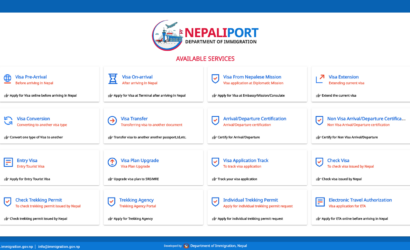
Most people can obtain a visa on entry to Nepal. There are some countries where a visa will need to be obtained prior to traveling (you can find a list of these countries at www.immi.gov.np)
If you want to avoid the sometimes lengthy queues at the airport, you can obtain a visa from the Nepali embassy in you home country before you travel. Please visit the appropriate websites in your country for details.
If you want to obtain a visa on arrival, you will need to fill in a landing card, (most airlines provide these before landing in Kathmandu, if not, they will be available in the airport) pay a fee (cost differs depending on your length of stay) and provide a passport photo so don’t forget to bring one in your hand luggage to present to the immigration officers. Visa fees are as follows:
US Dollars 25 or other convertible foreign currency equivalent thereto for 15 days multiple entry visa.
US Dollars 40 or other convertible foreign currency equivalent thereto for 30 days multiple entry visa.
US Dollars 100 or other convertible foreign currency equivalent thereto for 90 days multiple entry visa.
(information from the department of immigration, Nepal)
We would advise you to bring US dollars to pay for your visa, most major currencies are usually accepted also. Although there is a currency exchange in the airport (if they will not accept your currency), you may not get the best exchange rate; therefore it is always a safe bet to bring US dollars.
Can we take showers during the trek?
Showers are available at the teahouses. They will usually be shared bathrooms in most teahouses, especially the higher up you go. You will have to pay for a hot water shower per person. The higher you are, the colder it gets and you may find that you do not want to shower as often so you can wait just a few days until your descent.
How much money per day do you think I will need? What currency should I take?
Local currency in Nepal is rupees. We recommend you bring US dollars with you to Nepal and exchange them here as this is easily done and is a widely accepted currency. Although you may get a lesser rate on traveler’s cheques, we suggest you carry a mixture of both depending on your needs. The amount of money you will need on a daily basis depends on your spending habits. A guide would be $5 per day for extra drinks during your trek and $20 per day to cover lunch/dinner whilst in Kathmandu.
What do I have to carry with me on trek?
You will need to carry a reasonable sized daypack, big enough to carry personal items, water, camera, snacks, sunscreen, hat, a fleece jacket and gloves for higher altitudes. The porters will carry the bigger packs with your clothes etc…. They will carry packs up to 20kg. (10kg per person)
How do I get from the airport to my Hotel?
We will arrange a pickup service free of charge at anytime of the day or night to transfer you from the airport to your hotel. You will be met by a Mosaic representative on arrival. If you have booked a trip with us but have arranged to arrive in Kathmandu earlier and do your own thing until the trip starts, we will still pick you up at the airport, you just need to let us know your arrival date and time so we can come and meet you. Kindly look for signage showing the Mosaic Adventure logo or your name. Please note; We recommend that you deal with your own bags at the airport and carry them yourselves. There are people who will offer to carry your bags and will expect payment. You are not obliged to pay these people and it is not advisable to get out your wallet in front of them. Just tell them 'No, thank you!' if someone approaches you and walk away.
What if I get sick while on trek?
It depends on the nature of the sickness. Usually, if you become sick, you will descend to a lower altitude with the help and support of the guide and porters. If you are seriously ill, we will arrange an emergency helicopter evacuation service. Our guide will take immediate action according to the situation. Please ensure you arrange travel insurance that covers you for an evacuation service and trekking at high altitudes.
Our guides carry basic medicine and first aid equipment including simple painkillers, altitude sickness tablets, bandages, balm for muscle ache and medication to treat diarrhea and vomiting.
These are the questions we are often asked and we hope that you will find the answers useful. Please don’t hesitate to contact us if you have any further queries.