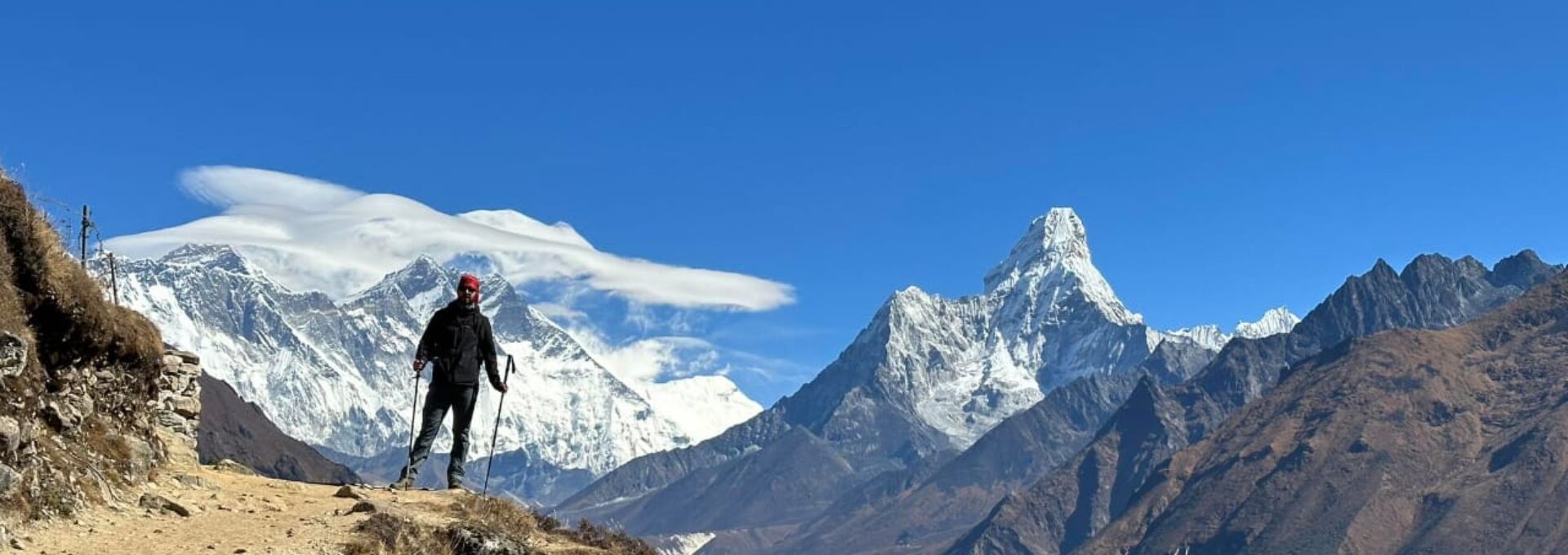
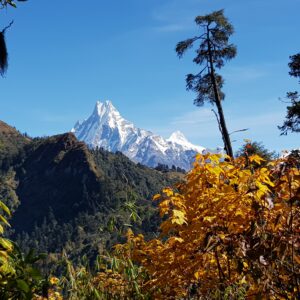
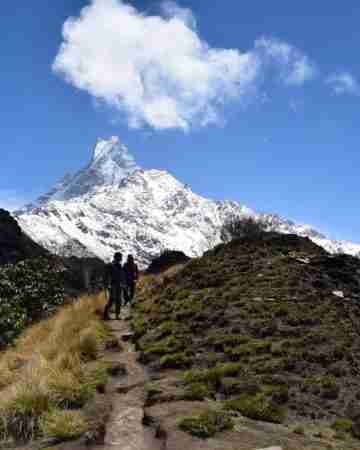
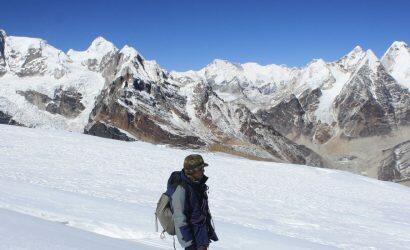
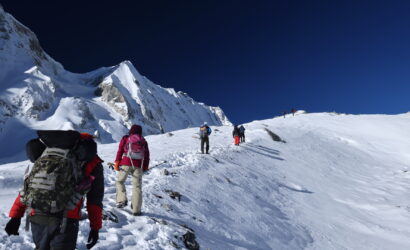
The paramount Nepalese trekking peak which gives you the opportunity to glimpse over four of the world's highest mountains:
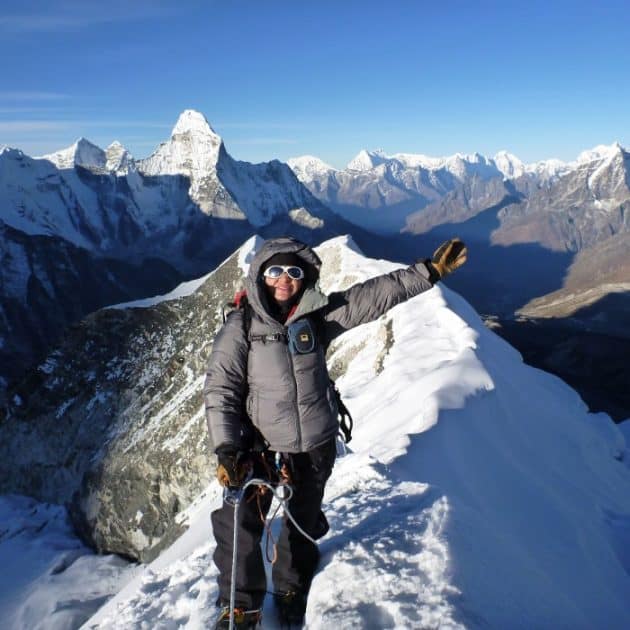
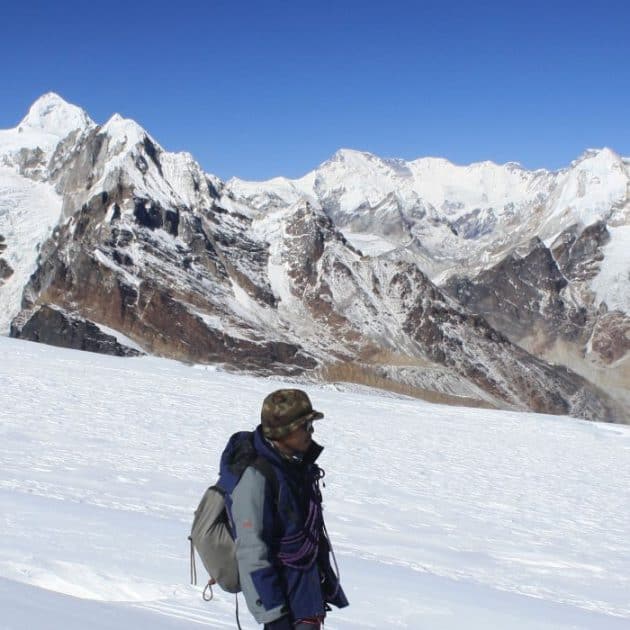
Being the highest trekking peak in Nepal, this fabulous Mera peak does not need any mountaineering experience. What you need for this challenging but rewarding climbing trip is just physical fitness and extrovert sense of adventure and Mosaic Adventure team will do the rest. Classified as a trekking peak at 6,476 meters (21,247 ft), Mera peak is a mountain that lies in the Himalayas, specifically in the Sagarmatha Region of Nepal.
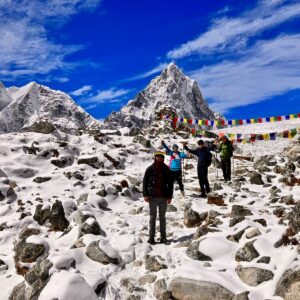
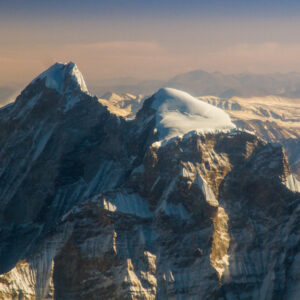
Hiking through the busy trails to Everest Base Camp and quiet passes, this trip leads us to sparsely inhabited Hinku Valley. Hiking all the way through a beautiful high alpine surroundings we can see Mera peak soaring over the valley with the altitude of 6476 meters. Dominating the watershed above the wide and thickly forested valley, Mera peak rises to the south of Everest showcasing four of the world’s highest mountains. When there is extremely high volume of snow or at the time when crevasses are open, the path can be arduous and demanding, but this is the case if you are not amateur mountaineers. Nevertheless, with strong determination, well build healthy lungs and well acclimatised journey we will definitely accomplish the journey to stunning Mera peak. Experienced climbing Sherpas, guide, porters and all necessary equipment of Mosaic Adventure is there to make the climbing the successful memory that remain in your heart for the rest of your life.
Day 01: Arrive Kathmandu
We will be taken to the Hotel of your choice, a delightful hotel situated away from the bustle of the city centre or a luxurious hotel in the heart of Kathmandu.
Day 02: Trip arrangements, meeting with staff and sightseeing around Kathmandu Valley
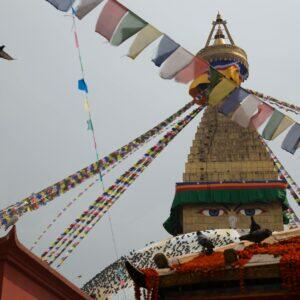
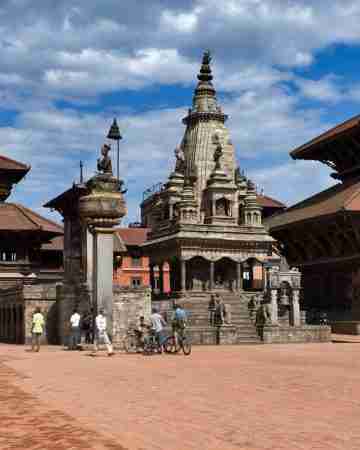
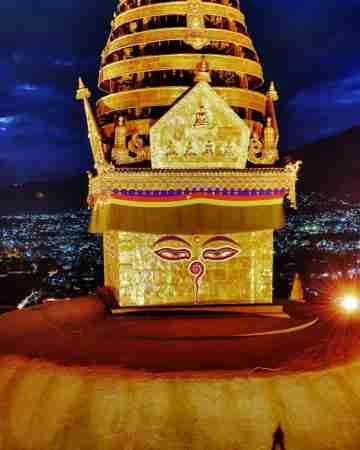
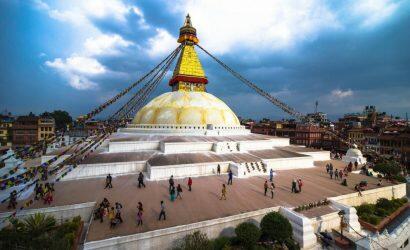
You will meet your trekking guide, discuss the trekking program and coordinate any last-minute arrangements. After staff meeting, with Mosaic Adventure's professional tour guide we visit Pashupatinath, Boudhanath Stupa, Swaymbhunath and Kathmandu Durbar Square. Rest of the time you can use for travelling around Thamel and shopping of needed equipment and other necessaries. Overnight at hotel.
Day 03: Kathmandu-Lukla by air
A short drive from hotel to airport, then the great flight to Himalayas with first view of Everest region where you would be stepping your feet, and that is the case if you are lucky enough to get the clear weather on that day. This twin otter aircraft will take us to the hillside village of Lukla, where we start our trek to Mera peak. Here we will meet our camp staff and porters and set off straight away for our first camp at Poyan (2,800m).
Day 04: Hiking to Pangkongma (2,846m)
When we crosses the Poyan Khola, we turn off the main trade route coming up from the south and join an older route, which climbs steeply to the ridge-line overlooking the Khare Khola. Descending the other side of the ridge, we then contour along the hillside before climbing steadily up to the attractive farming and trading village of Pangkongma (2,846m). Many expedition members have been made welcome by the villagers here, spending several pleasant hours warming themselves in front of an open fire in the enveloping and welcoming atmosphere of the local's traditional Sherpa homes.
Day 05: Pangkongma to Nashing Dingma (2,600m)
Looking at fine views, westward towards Takshindu Monastery and Lamjura, we climb through thick rhododendron forest and bamboo leading to the Pangkongma La. On the way up to the Pangkongma La, it is worth detouring via the Pangkongma Monastery for a guided visit. From the pass, we have good views of the south face of Mera with its twin peaks and of its neighbour Naulekh. We then make a scenic descent with beautiful views looking south across the endless foothills rising each side of the Hinku valley. This steep descent leads down to the wire rope bridge that spans the Hinku Khola. A steep, strenuous climb on the opposite side leads to Nashing Dingma (2,600m). We stay here for the night at the excellent campsite established by the Makalu National Park.
Day 06: Nashing Dinmg to Chalem Kharka (3,600m)
Achieving height gradually through pasture and lush greenery, the trail steepens as we climb up to the Surke La. It is possible to take a nice, welcome cup of tea in a lodge just over the pass. Walking on, eventually, we reach an attractive campsite at a Col 1km beyond Chalem Kharka (3,600m), set among fir trees and rhododendron bushes.
Day 07: Chalem Kharka to Chunbu Kharka (4,200m)
Hiking the side of a ridge, we emerge from the last traces of rhododendron and the terrain becomes more rugged. Passing through high grazing country and crossing a small pass, we are treated to some excellent views of Kangchenjunga and Jannu to the east. We continue climbing to Panch Pokari and then on to camp at Chunbu Kharka (4,200m).
Day 08: Have a rest day at Chunbu Kharka
This is the seventh day when we may have a well-earned rest day, though for those feeling fit, there is a rewarding walk up to a hanging corrie lake behind the camp. This has good views and helps aid acclimatisation. Today is also a good day for putting in an equipment check session - boots and crampons, harness and knots.
Day 09: Descending from Chunbu Kharka into the Hinku Valley
Setting off from Chunbu Kharka and climbing steeply uphill for 20 minutes or so, before contouring around high above the Hinku Valley. We then make a series of steep descents through scree and then rhododendron to eventually arrive on the valley floor, where we cross to the west bank of Hinku River by a wooden bridge at Khote (3,550m). We'll have had lunch in the forest, during our descent. Khote is now quite a large settlement of lodges that have been built over the past 10 years. We camp on a pleasant grassy patch not far from the river.
Day 10-11: Khote to Tangnag (4,360m) and extra Acclimatisation day
Now, we follow the west bank of the riverbed up the valley to Tangnag (4,360m). A magnificent, towering mountain, known by its survey name of Peak 39 or on some maps, "Kayashar ", dominates the head of the valley. The trail leads steadily up the side of the valley through open pasture, used for the summer grazing of yaks brought up from the lower reaches of the valley. Finally, we reach Tangnag, which has grown into a small hamlet of tea-shops and lodges since expeditions first started to frequent this region of Nepal.
Day 12: Khare (5,100m)
Today we head up to Khare (5,100m). From Khare, it is possible to do a glacier session to ensure that everyone is happy with the use of ropes and crampons. The views of Mera from our breakfast table at Khare are particularly stunning.
Day 13: Mera Peak base camp (5,300m)
We climb up to the Mera La (5,400m). This is an exciting day as we climb onto the Mera Glacier and follow it to the pass. This is in a superb high mountain setting and is a worthwhile objective in itself. We establish our base camp on the far side of the pass, so as to avoid sleeping on ice. The descent from the pass to the campsite is very short and can be done easily using the margin between the moraine and the glacier on its northern side as it descends from the col.
Day 14: Acclimatisation at Mera Peak BC
This is another acclimatisation day (at 5,300m), in final preparation for the climb tomorrow. Not only do we acclimatise further, we use the day to best advantage with another snow and ice training session on the snout of the glacier that descends from the Mera La. This "ecole de glace" provides essential skills training in the use of fixed ropes and abseiling.
Day 15: Move to high camp (5,800m)
Today, we make the climb to the high camp. This is located at about 5,800 metres on the Northern slopes of the upper mountain. It provides an excellent launch pad for the final climb to the summit. There is no need to make an early start but we must get our equipment ready so that the Sherpas can help with carrying this and the camp stores to the high camp. Having gained the Mera La, the route turns left (south) and follows easy angled snow slopes. After a short distance an area of crevasses is reached. Under normal conditions these can be walked around very easily, although looking into their deep, dark depths is always impressive. The crevasses soon give way to slightly steeper but open snow slopes that lead without difficulty to the high camp. This camp is in an excellent setting with wonderful views of Everest, Makalu and the Nuptse, Lhotse wall directly ahead. The setting sun casts an unbelievably magic light on these awesome mountains.
Day 16: Mera Peak Ascent (6,476m/21,246ft)
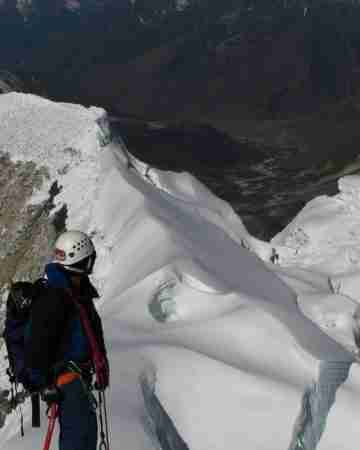
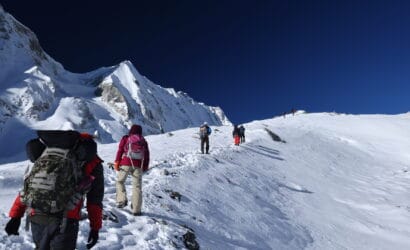
The climb to the summit of Mera starts gradually and much will depend on snow and general weather conditions. The central summit will soon appear above the head of a wide glacier flanked by two ridges. We climb the centre of this over open snowfields and avoiding crevasses. The route then swings south-east, skirting below and to the east of the left-hand ridge before turning back rightwards towards the main summit ridge of Mera. Mera actually has three summits; the highest is our objective. We reach this by following a classic snow-ridge to just below the final wall that guards the top. This short steep snow slope is easily climbed but there is a big effort required to climb this last 50 metres. Your reward, however, is a feeling of ecstatic jubilation as you survey the magnificent panorama from the top. After taking pictures and enjoying the view, we descend by the same route back to our campsite below the Mera La i.e Khare.
Day 17: Spare day
This is a spare day to allow for bad weather or for additional summit attempts.
Day 18: Trek to Kothey (3600 m)
We follow back our track to Kothey. We descent firstly to Tagnag before continuing to Kothey.
Day 19: Trek to Thuli Kharka (4300 m)
Getting out of Kothe we follow downstream toward Hinku river before ascending to Tattor and to Thuli Kharka via pine forest.
Day 20: Trek to Lukla
We cross the exciting Zatrwa La pass (4,600m) before descending steeply into the Dudh Kosi valley and to Lukla. The pass gives plenty of opportunities for photographing the dramatic peaks. You can enjoy rest of the time exploring around reknown town Lukla.
Day 21: Fly back to Kathmandu
If weather permits we would take a 45 minute morning flight back to Kathmandu followed by the hair-raising take-off. Spare time on your own doing shopping and exploring around Thamel.
Day 22: Self sightseeing, shopping and rest in Kathmandu. (Buffer day in case of any delay during our trip)
Day 23: Fly Back to destination country
| Trip Starts | Trip Ends | Availability | Price USD | |
|---|---|---|---|---|
| August 29, 2012 | September 20, 2012 | US$ 2395 | ||
| September 5, 2012 | September 27, 2012 | US$ 2395 | ||
| September 12, 2012 | October 4, 2012 | US$ 2395 | ||
| September 19, 2012 | October 11, 2012 | US$ 2395 | ||
| September 22, 2012 | October 14, 2012 | US$ 2395 | ||
| September 26, 2012 | October 18, 2012 | US$ 2395 | ||
| September 29, 2012 | October 21, 2012 | US$ 2395 | ||
| October 1, 2012 | October 23, 2012 | US$ 2395 | ||
| October 6, 2012 | October 28, 2012 | US$ 2395 | ||
| October 8, 2012 | October 30, 2012 | US$ 2395 | ||
| October 11, 2012 | November 2, 2012 | US$ 2395 | ||
| October 15, 2012 | November 6, 2012 | US$ 2395 | ||
| October 18, 2012 | November 9, 2012 | US$ 2395 | ||
| October 22, 2012 | November 13, 2012 | US$ 2395 | ||
| October 25, 2012 | November 16, 2012 | US$ 2395 | ||
| October 29, 2012 | November 20, 2012 | US$ 2395 | ||
| November 1, 2012 | November 23, 2012 | US$ 2395 | ||
| November 5, 2012 | November 27, 2012 | US$ 2395 | ||
| November 8, 2012 | November 30, 2012 | US$ 2395 | ||
| November 12, 2012 | December 4, 2012 | US$ 2395 | ||
| November 15, 2012 | December 7, 2012 | US$ 2395 | ||
| November 19, 2012 | December 11, 2012 | US$ 2395 | ||
| November 22, 2012 | December 14, 2012 | US$ 2395 | ||
| November 26, 2012 | December 18, 2012 | US$ 2395 | ||
| November 29, 2012 | December 21, 2012 | US$ 2395 | ||
| December 3, 2012 | December 25, 2012 | US$ 2395 | ||
| December 10, 2012 | January 1, 2013 | US$ 2395 | ||
| December 17, 2012 | January 8, 2013 | US$ 2395 | ||
| December 24, 2012 | January 15, 2013 | US$ 2395 | ||
| December 31, 2012 | January 22, 2013 | US$ 2395 |
Departure dates and itinerary arrangements can be custom-tailored to your needs, so please contact us with your inquiries regarding your Mera Peak Climbing departure date.
Guaranteed: Trip is Guaranteed to run.
Limited: Trip is Guaranteed to run, but only with limited spaces. Please contact us.
Booked: Trip full or unavailable, but we can open new departure so please contact us.
01. Airport / Hotel / Airport pick up & drop by private car / van / bus.
02. Standard hotel in Kathmandu with breakfast.
03. Guided city tour in Kathmandu by private car / van / bus.
04. Sightseeing/Monument entrance fees.
05. All your standard meals as per itinerary during the trek and climbing (breakfast, lunch and dinners).
06. All hot drinks as per itinerary such as tea, coffee (3 times a day) during the trek.
07. Tea housesand tented accommodation during the trek & Climbing.
08. A government licensed English speaking Guide during the trek and climb.
09. Required number of staff and Porters to carry your luggage during the trek.
10. Food, accommodation, salary, insurance, equipment, medicine for all staff.
11. Everest National Park permits.
12. Mera Peak Permit fees.
13. Garbage Deposit Fee.
14. General Climbing equipment such as Rope, Ice Screw, Snow Bar etc.
15. Down jacket, sleeping bag (which needs to be returned after the trek.) and T-shirt (yours to keep).
16. Airfare from Kathmandu – Lukla - Kathmandu including airport departure tax in Kathmandu and Lukla airport.
17. Surface transfer from and to Kathmandu.
18. Travel & Rescue arrangements.
19. Farewell dinner in Kathmandu
20. All our government taxes and official expense.
01. Lunch and dinner whilst in cities.
02. Travel & rescue insurance (compulsory).
03. Items of a personal nature such as alcoholic drinks, cold drinks, laundry & hot shower.
04. Personal trekking and mountaineering gears.
05. Tips for trekking staff and driver. (Tipping is expected).
06. Any others expenses which are not mentioned on Price Includes section.
07. Nepal entry visa, you can obtain a visa easily upon your arrival at TIA in Kathmandu.
How fit do I have to be?
Mera peak is classified as trekking peak climbing over 6000 meters of altitude. Though you do not require previous trekking or mountaineering experience, high level of fitness is essential. It is not required that you have any technical experience, only that you be in good physical conditioning and are able to walk for five to six hours over hilly terrain in high altitude with a light bag pack
What equipments do I need?
What is the level of accommodation like?
In Kathmandu you'll stay in a twin room with private facilities like attach bathroom, air conditioner etc. Tea house accommodation will be available during trekking period and tented camp during climbing period. According to the availability we will sleep in dormitories, twin and triple rooms. The bed are available with mattress of various thickness therefore you will be provided a sleeping bag to use throughout the trek/climb.
Is enough drinking water available? How many liters of water shall we carry in our day pack?
You will have enough water available throughout the trip. But, we recommend you to buy mineral water available in plastic bottles that can be bought at all teahouses.
You can carry 3-4 liters of water; you can get your bottle refilled at teahouses available throughout the trip.
Where can I keep my luggage?
You can keep the unnecessary items in the hotel in Kathmandu for free of charge.
Do I need to take walking poles?
Walking poles are not essential but would be useful especially on the way down. Poles help you balance on the way down and take the strain off of your legs (quad muscles) on some of the steep climbs.You can buy or hire those in Kathmandu.
Can I buy any equipment in Kathmandu before the start of the trip?
There are plenty of trekking shops in Kathmandu selling equipments for cheaper price comparing to the price in developed countries. You can get it for cheaper but cannot guarantee the quality.
Can I recharge my iPod, batteries while on the mountain?
Yes, you can recharge your iPod, batteries etc with solar system in some of the teahouses. But, please remember that plugs might be different so don’t forget to buy adaptors in Kathmandu before the trip. Those are sold in the many stores and stalls on the street in Kathmandu. Recharge service is paid service, you can expect around 2-3$ per hour.
Is it recommended to get Nepalese visa in advance or at the airport?
Obtaining Nepalese visa at arrival is easier expecting some time queuing. If you get your visa in advance, you can avoid the queue.
Don’t forget to bring cash as ATM is not available at the site.
Can we take showers during the trek?
You can get hot shower service throughout the trekking period. However, more you climb higher less you will find it pleasing.
How much money per day do you think I will need? What currency should I take?
Local currency in Nepal is rupees. Dollar is recommended as you can get it exchange easily. Though you get less rate on travellers cheque we suggest you to carry mixture of both depending on your need. Depending on your drinking habit around $10 per day for your extra drink and bar bill during the trek and around $20 for lunch/dinner in Kathmandu.
What do I have to carry with me on trek/climb?
You will only have to carry a daypack, which should be a reasonable size to carry a water bottle, sunscreen, camera, etc. Your other packs are carried by porters.
What if I get sick while on trek?
It depends on nature of sickness. Normally if you get sick you will descend to lower altitude with help of support staff. But if the case is critical we will arrange emergency helicopter evacuation service. Our guide will take immediate action according to the situation.
*Altitude sickness can affect everyone while trekking including young and healthy people and is a genuine concern in Khumbu. If you feel dizzy, suffer palpitations or severe headaches, return immediately to a lower altitude. Do not take altitude sickness lightly. It can be fatal!
Do I need to get any vaccination?
Immunizations are not mandatory for this trip, but we do recommend you are covered for - diphtheria & TB, hepatitis A, - hepatitis B, -malaria, typhoid, polio and tetanus.
Consult your physician and visit the travel clinic at a hospital or your local health department for the most up to date info on travel requirements.
These are the questions we are often asked and we hope that you will find the answers useful. Please don’t hesitate to contact us if you have any further queries.