Q. Is it safe for tourists to travel in Nepal?
Yes. In the past, Nepal has experienced political unrest, however since November of 2006, the signed Nepal Peace Agreement, between the Government of Nepal and the Nepal Communist Party (Maoists) has brought this unrest to a close.
The U.S State Department has continued to warn travelers of its travel advisory stating: "Americans living or traveling in Nepal are encouraged to register with the U.S. Embassy through the State Department's travel registration website".
The fighting in the past has ceased and has never and is not expected to affect tourists or tourism in Nepal in any way. The Maoists leaders have stated that tourists are welcome. And first-hand accounts from tourists are very positive:
http://goasia.about.com/od/nepal/a/nepalblogjan06.htm
We advise you to read the latest information about Nepal's political situation and understand the issues in order to make educated decisions for yourself. Websites with current and often-updated information include:
http://go2nepal.wordpress.com/2006/11/22/nepal-peace-agreement-november-2006/ http://news.bbc.co.uk/2/hi/south_asia/
http://www.nepaltourismdirectory.com/nepal_tourism_directory_news_details.php?nid=13
Please feel free to contact us to discuss these issues. We would be happy to give you more information.
Q: When is the best time to visit Nepal?
The best season to visit Nepal is after the monsoons that end in August until mid-December, before the winter sets in. Also, from mid-February to early June are the most preferred months by visitors. During these two periods, the rains wash the dusty tracks and the valley looks magnificent with blooming flowers. Mountain views are clear most of the time. It is humid in plains at this time but it is still better than the scorching heat of the summer.
It is best to visit hilly areas in summer; that is, the months of May and June. The average temperature at that time is around 22-25 degrees Celsius. Nights are a bit chilly in the lower Himalayan region but are comfortable. Mountainous areas are extremely unsafe during the monsoon season, which are very common. The persistent rains make the hilly tracts slippery.
In winter, most of the hilly areas become threats due to very heavy snowfall and avalanches, but if you are fond of snowfall then you can opt for the lower Himalayan regions that look beautiful covered in blankets of snow.
Q: Do I need any vaccinations?
You should contact your general practitioner or travel clinic for the latest travel health advice. It is advisable to be up-to-date with Tetanus, Polio, Typhoid, and Hepatitis A vaccination shots. If you are extending your stay in Nepal you may need anti-malarial protection.
Q: Do I need travel insurance?
It is necessary to have travel insurance for all clients to take in any tour. It should provide adequate protection for the full duration of the tour to cover personal injury, medical expenses, repatriation expenses, helicopter evacuation, loss of luggage, etc. You can arrange this yourself or through Mosaic Adventure in Nepal. The coverage per day is $12 dollars per person.
You must advise your insurer that you are going on a trek at relatively high altitudes and that your cover needs to include air evacuation and repatriation. A copy of your insurance document should be sent to us prior to coming to Nepal.
Q: Do you have an airport pick-service?
Yes we do. If requested prior to your arrival, we can arrange for our airport representative to greet you outside the Terminal Hall. He/She will be holding a ‘Mosaic Adventure’ sign with your name on it. Upon arrival, you will be taken to your hotel.
Q. How much shall I bring & where can I exchange my money?
You can exchange in Nepal, primarily in Kathmandu and in Pokhara. It really depends on your budget and what you want to do and for how long but approximately $500-$1,000 in either travelers’ cheques or cash for your trip would be sufficient. ATM cards and credit cards can be used in Kathmandu and Pokhara if additional cash needed. It is advisable to exchange your money either on your first day or the day after while you are in Kathmandu at a reliable money exchange counter.
Q. Should I trek with an agency?
Trekking with an agency can be worthwhile for those who are on a very tight schedule but not on money. A trekking agency can organize a trek for you at affordable costs, which includes food, accommodations, transportation, porters and guides. To receive trekking permits and TIMS cards, clients must go through a trekking agency for issuing and ensuring a safe and legalized trek or tour.
Q. What is TIMS and is it required?
Please click here for TIMS information.
Q: Does your company provide a TIMS card?
Mosaic Adventure is a government registered company and a member of TAAN. We are legally authorized to provide TIMS cards to trekkers. For further information about this, please contact us at info@trekntour.com.
Q: How fit do I need to be for trekking?
If you are reasonably fit and enjoy walking you will find trekking suits you. Normally the shorter treks tend to be easier whilst the longer ones often require a better standard of fitness. It is important to remember, however, that trekking requires an adequate level of physical conditioning. To prepare yourself for a trek, especially a difficult one that lasts two weeks or more, some moderate physical exercise is recommended before you embark on your journey such as walking, running swimming, or hiking. It is also worth remembering you can choose the pace and direction of your trek.
*Any person suffering from a pre-existing medical condition or diseases must seek medical advice before considering any trek.
Q: What is the general duration of treks?
A: The duration of the trek depends on the region of the trek and on interests which each client has. Generally speaking, treks can range from 2-3 days to a month’s time or sometimes longer periods if trekkers’ wish. Even the same trek can be of a different duration for different trekkers depending on their wishes and interests on the route.
Q: What will the trekking be like?
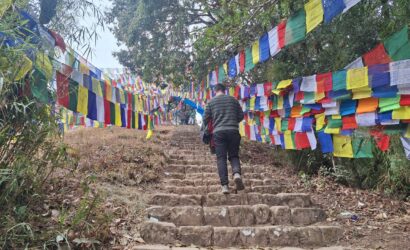
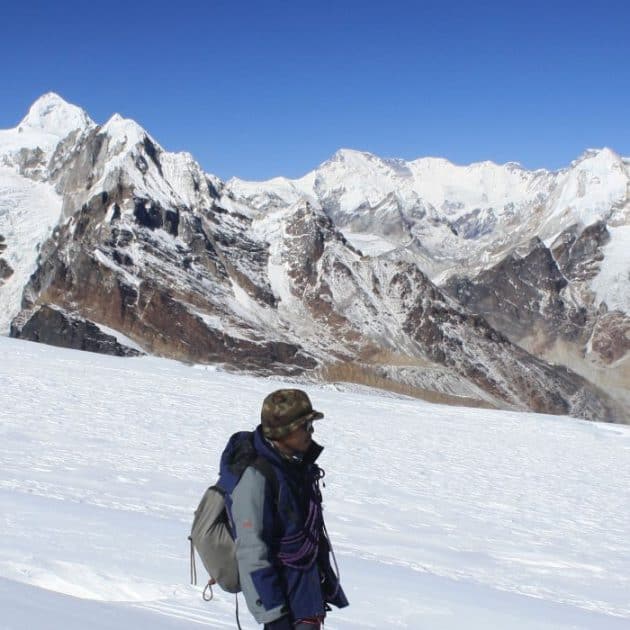
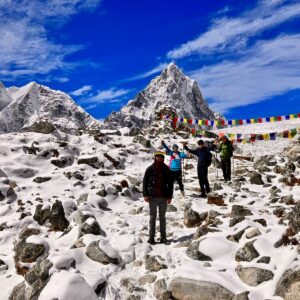
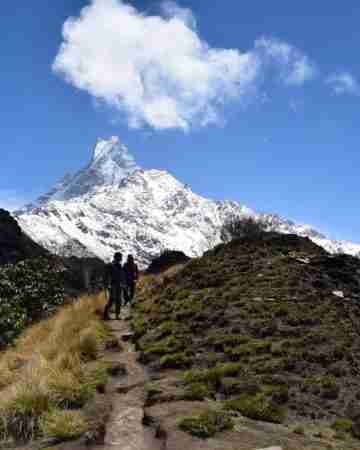
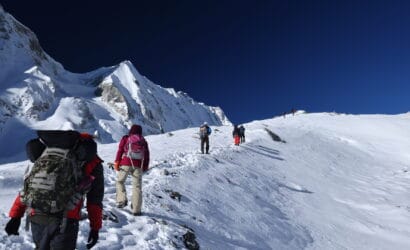
You will mostly be on well-maintained trekking routes that consist of dirt trails. The terrain on some of these trails may be long, steep climbs or descents as well as rocky, dusty paths and forest tracks. There are also a lot of big stone steps and staircases especially on the Annapurna circuit. In some cases, treks include mountain passes so the trail can be narrow in places. You will feel a moderate altitude effect starting at around 3,000m upwards.
Q. Is it necessary to use a trekking guide?
There is no compulsion to use a guide while trekking in Nepal. However, no matter how experienced or fit you are at outdoor activities, it is important to have a good orientation to a new area, especially if you go trekking. We highly recommend every guest to use our trained guides so that guests can easily and safely complete their trek. We believe that having a qualified trekking guide is a minimum safety requirement and can also enhance your enjoyment and understanding of the region as they act as a companion and interpreter. Our trekking guides are well-versed in a variety of foreign languages including English and take full responsibility of everything during a trek or expedition.
Q. What equipment should I bring when trekking in Nepal?
Please click here to see the equipment list we recommend.
Q: What is the weather & temperature like when trekking?
The weather can be unpredictable in the mountains. However, at night it is generally cold and the days are generally warm. If it is raining at the base of the mountain, it will be snowing at the top of its peak. There will be heavy snowfall during the months of December and February. It is important that you stay warm and dry in just about any condition. Temperatures could be as high as 20 degrees C and as low as -10 degrees C.
Q: What are the accommodations like on a trek?
Along the trekking routes, teahouses and lodges generally provide basic clean facilities with a mattress and a quilt or blanket. We can also offer you sleeping bags if needed (which need to be returned after your trip) but it is a good idea to have your own sleeping equipment if possible. Accommodations have private rooms with twin beds that may be used for double or single occupancy. Teahouses have an adjoining dining room around a fire burning stove. You may take a hot shower but need to ask them to boil the water.
Q. What is AMS (Altitude Sickness)?
Please click here to read about Altitude Sickness and its symptoms.
Q. What will be done if I suffer from altitude sickness or any kind of sickness?
First of all, your trekking guide will provide you with First Aid. If the case becomes more serious, you will be transferred to a health post where you can consult with a doctor. For acute sickness, at your request, you will be immediately taken down by helicopter or airplane to Kathmandu for treatment and rest. It is strongly recommended to descend from the mountain if you are suffering severely from altitude sickness.
Q. What is your cancellation policy and Terms of Conditions?
If our clients are unable to make their trip or want to cancel their trip due to any unavoidable circumstances, Mosaic Adventure can only refund 65% of the deposited amount. However, clients can postpone their travel date or make slight modifications to their original travel itinerary free of cost if given proper notice. Please see our Terms of Conditions for further details.
Q: What essential documents do I need to bring with me?
You should bring a valid passport (must be valid for up to 6 months after you return from your tour; keep an extra photocopy just in case), a copy of your travel insurance, cash and traveler’s checks (keep numbers and proof of purchase separately); flight tickets, emergency contact numbers of T/C’s, banks, insurance and family members and any medications.
Affiliated with